
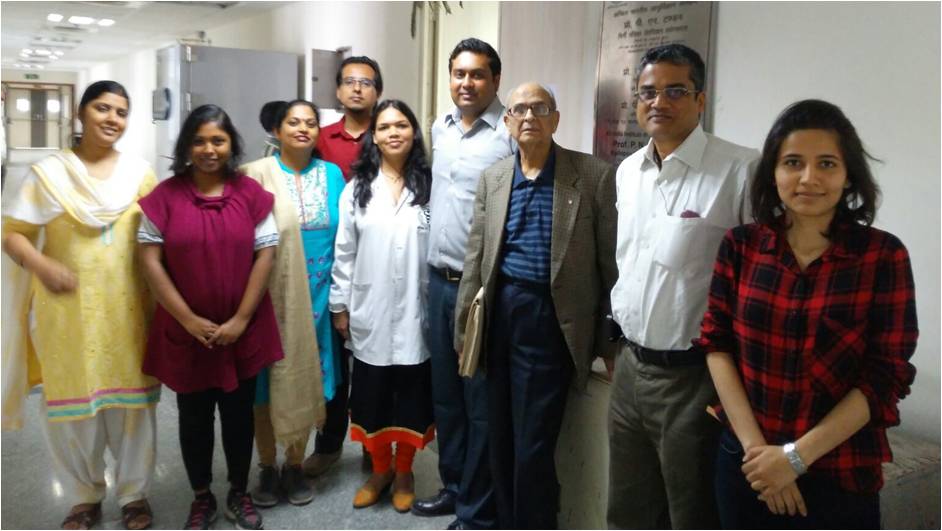
Prof. P N Tandon's Epilepsy Neurobiology Lab :
Our best understanding of what "causes" epilepsy in humans has been through clinical-pathological investigations of patients undergoing resective brain surgery or from tissues collected at the time of surgery.
We use the resected brain specimens for the following studies:
Intracellular electrophysiological studies : in vitro analysis of brain slice preparations from the surgery zone of epilepsy patients has been instrumental for the investigation of epileptogenesis. Animal models suggests significant changes in the excitatory and inhibitory synaptic transmission during the process of epileptogenesis. Using patch-clamp technique we study the tissues obtained from epileptogenic focus for any alteration in excitatory and inhibitory neurotransmission. We attempt to corroborate it with the degree of severity seen on imaging, functional and electrical studies. We investigate if there is shift in the electrical properties of neurons in the epileptogenic zone compared to the tissue obtained from non-epileptic controls.
Gene & Gene Network Analysis: Array-based profiling studies have detected aberrant gene expression patterns in large number of genes, still most of the genes that participate in the development of drug resistant epilepsy (DRE) remain unidentified. We are performing transcriptomic analysis (RNAseq), epigenetic (CpG methylation, miRNA profiling, DNMT & HDAC expression) analysis and inflammatory network analysis of the brain tissues resected from the DRE patients undergoing surgery in order to understand the molecular mechanisms underlying DRE.
Using the above modalities, our aim is to characterise the neurobiology of the epileptogenic focus and correlate it with the imaging, structural and electrical findings so that through a systems biology approach, we are able to understand the epileptogenic focus better.